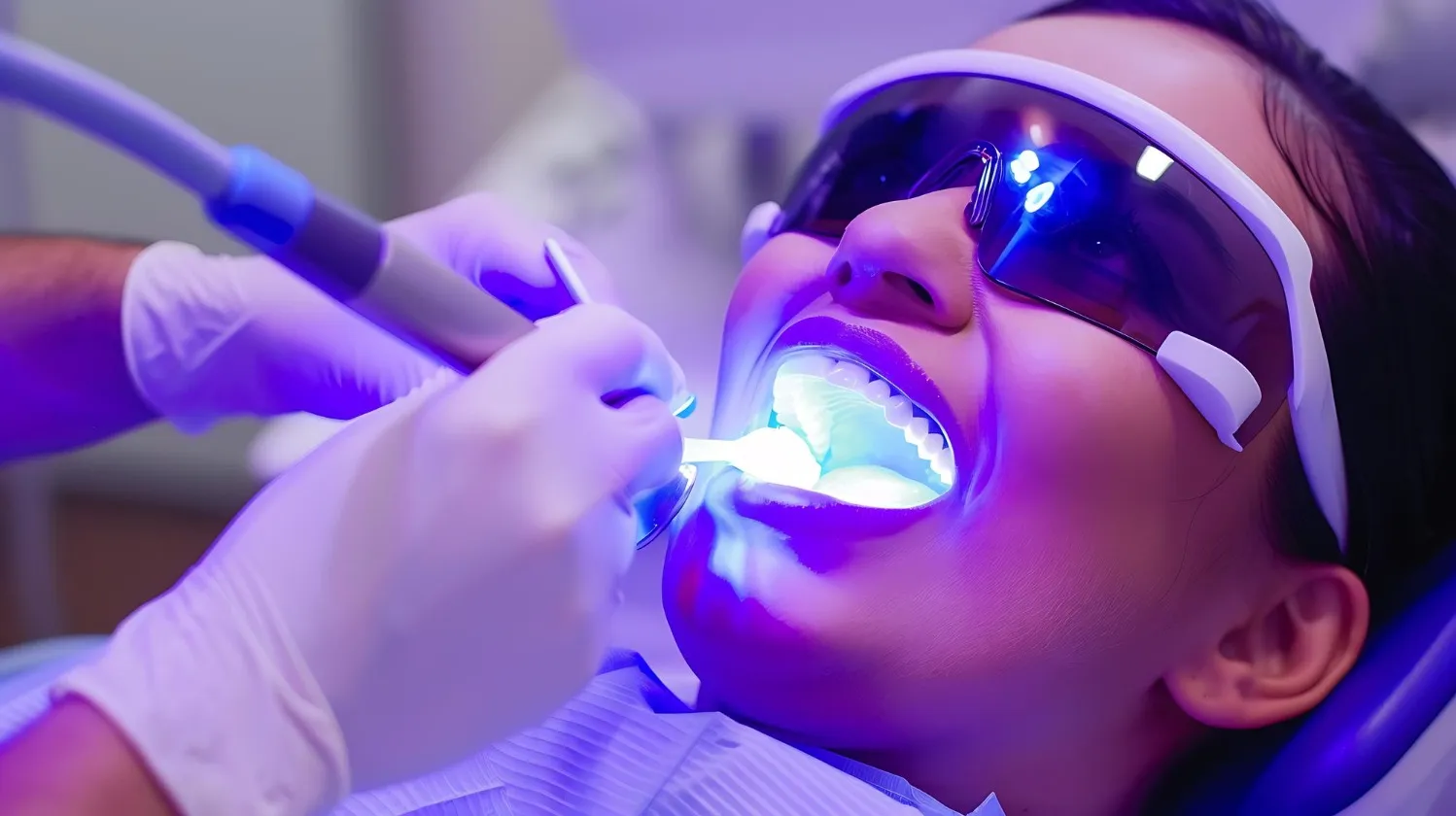
Modern dentistry increasingly uses technologies intended to make selected procedures more controlled and precise. Dental Laser Treatment is one such option, particularly for certain gum and oral soft tissue procedures.
Patients often hear the word 'laser' and assume it automatically means painless, incision-free, or suitable for every dental condition. The reality is more nuanced. Dental lasers can be highly useful, but their value depends on the procedure being performed and the clinical situation.
Where Are Dental Lasers Used?
Different laser systems interact with tissues differently. Depending on the equipment and treatment requirement, lasers may be used in selected procedures involving gums and other oral tissues.
Possible applications include:
- Gum contouring
- Management of selected soft tissue conditions
- Certain periodontal procedures
- Removal of excess soft tissue
- Exposure of teeth in selected cases
- Supporting management of some oral lesions
- Selected surgical applications
The presence of laser technology does not eliminate the need for diagnosis. The dentist must first determine what is causing the problem.
How Does Laser Treatment Differ From Conventional Techniques?
Traditional dental surgery often uses instruments such as scalpels, curettes, or other mechanical devices.
A laser uses concentrated light energy to interact with targeted tissue. In suitable applications, this can allow controlled tissue removal and may help manage bleeding during the procedure.
However, conventional methods remain appropriate for many treatments. The question should not simply be whether laser dentistry is 'better.' A more useful question is which technique suits the specific condition.
What Should Patients Evaluate?
Before choosing a procedure because laser technology is available, consider four practical points.
The Diagnosis
Bleeding gums, swelling, excess gum tissue, and oral lesions can have different causes. Technology should be selected after the underlying condition is identified.
The Type of Laser
Dental lasers are not all identical. Different systems are intended for different tissue interactions and applications.
The Dentist's Treatment Plan
Equipment is only one part of treatment. Clinical judgment determines where and how it should be used.
The Alternatives
Patients should understand whether conventional treatment is also suitable and why a particular technique is being recommended.
Does Laser Dentistry Remove the Need for Anaesthesia?
Not necessarily.
Anaesthesia requirements vary according to the procedure, treatment area, tissue involved, and individual sensitivity. Patients should discuss this before treatment rather than assuming that every laser procedure can be performed without local anaesthesia.
Is Recovery Different?
Certain soft tissue laser procedures may involve limited bleeding and controlled treatment areas, but recovery depends heavily on what has actually been done.
A small gum contouring procedure cannot be compared directly with more extensive periodontal treatment simply because both involve a laser.
Following aftercare instructions remains important.
Finding the Right Treatment Approach
For people in Bengaluru researching modern dental procedures, technology can be a useful consideration but should not become the only reason for choosing treatment.
Patients in Munnireddypalya can have their condition evaluated at Dental Junction before deciding whether Dental Laser Treatment has a meaningful role in their particular case.
A good dental decision starts with the problem being treated. The technology should support that decision rather than define it.
Keywords