Wisdom tooth discomfort often behaves unpredictably. The area may become painful for several days, settle after medication or improved cleaning, and then flare up again weeks or months later. This repeated pattern can make it difficult to know when observation is reasonable and when Wisdom Tooth Removal should be considered.
The answer depends largely on the position of the tooth and what is happening to the surrounding tissues.
Why Do Wisdom Teeth Cause Problems?
Wisdom teeth are the last permanent teeth to develop at the back of the mouth.
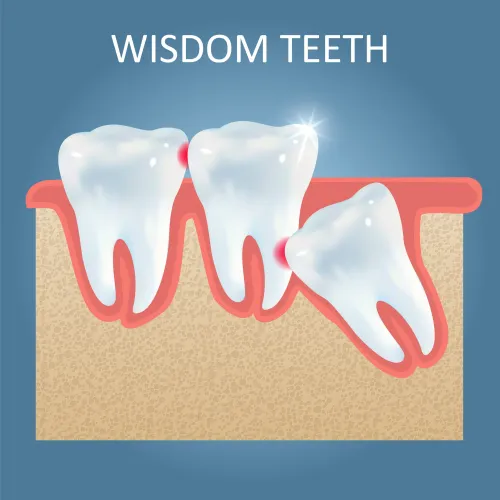
In some people, they erupt normally and remain healthy. In others, there may not be enough space for them to emerge properly.
A wisdom tooth can become:
- Partially erupted
- Trapped beneath the gum
- Angled toward the neighbouring tooth
- Difficult to clean
- Associated with repeated gum inflammation
- Affected by decay
- Involved in other dental problems
Partially erupted wisdom teeth can be particularly troublesome because a flap of gum may remain around part of the tooth, creating an area where food and bacteria accumulate.
Does Every Wisdom Tooth Need Removal?
No.
A wisdom tooth that has erupted properly, functions normally, can be cleaned effectively, and shows no evidence of disease may not automatically require extraction.
Removal is generally considered according to clinical findings rather than simply because a third molar exists.
This is where dental examination and imaging become important.
What Are Signs That an Evaluation Is Needed?
Recurring pain at the back of the jaw deserves attention, particularly when accompanied by:
- Swollen gum around the wisdom tooth
- Difficulty opening the mouth comfortably
- Pain while chewing
- Bad taste from the area
- Food repeatedly getting trapped
- Decay in the wisdom tooth
- Problems affecting the neighbouring molar
Significant swelling and other acute symptoms should be assessed promptly.
What Determines the Difficulty of Removal?
Wisdom tooth procedures are not identical.
A fully erupted tooth may require a different approach from one located beneath the gum and bone.
Before recommending removal, the dentist may evaluate:
- Tooth position
- Root shape
- Relationship with nearby structures
- Available access
- Condition of the adjacent tooth
- Existing infection or inflammation
- Relevant medical history
Dental imaging can provide information that is not visible during an ordinary mouth examination.
What Happens After Removal?
Post-procedure care is an important part of recovery.
Patients are typically given instructions regarding oral hygiene, food, physical activity, medication when prescribed, and care of the extraction area.
The exact recovery experience varies according to the complexity of the procedure and individual healing.
Following the dentist's instructions helps protect the healing site.
Choosing Care for a Repeated Wisdom Tooth Problem
People living around Sultanpalya may find it tempting to repeatedly manage wisdom tooth discomfort with temporary measures.
Dental Junction can evaluate recurring symptoms and determine whether monitoring, local treatment, or Wisdom Tooth Removal is appropriate.
The key decision is not whether wisdom teeth are generally 'good' or 'bad.' It is whether a particular tooth can remain healthy, functional, and maintainable in its present position.
Keywords