A smile can look uneven because of tooth proportions, colour, gum levels, tooth position or the way the lips move—not because every tooth needs the same cosmetic treatment. By understanding how dentists assess these factors, you can compare conservative options, identify when orthodontics or gum treatment should come first, and approve a plan that protects healthy tooth structure.
Key takeaways
- Define the changes you want before choosing a cosmetic treatment.
- Check tooth proportions, shade, gum display and facial balance together.
- Compare veneers with composite bonding for durability, repair and maintenance.
- Treat decay, gum disease or bite problems before cosmetic work.
What happens during a smile-design consultation?
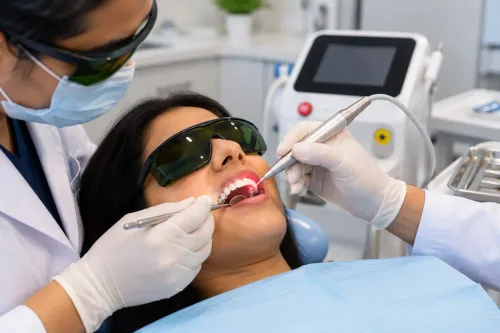
A smile design consultation turns a concern such as uneven edges, dark teeth or excessive gum display into a treatment plan, not a promise of one procedure. The dentist first asks what you want changed and what you need to keep comfortable, natural-looking and maintainable.
1. The dentist records clinical photographs and a digital dental scan, or takes dental impressions for models. These records show tooth position, proportions, gingival levels and facial and dental midlines; photographs also capture lip mobility and the smile in movement.
2. A bite assessment for cosmetic dentistry checks occlusion, tooth wear, clenching forces and available space. A gum examination covers inflammation, recession and periodontal health, while existing fillings, crowns, veneers and bonding are reviewed because restorations placed over disease or unstable structure can fail.
3. The dentist uses these findings to select whitening, bonding, veneers, orthodontics or gum treatment. The plan must also address how you will clean around the result and maintain it over time.
A diagnostic mock-up or trial smile lets you test proposed tooth length, speech, lip comfort, incisal-curve position and cleaning access before irreversible treatment. Report interference or awkward sounds while speaking, not only your reaction to a posed image.
Digital smile-design software combines scans and photographs to show a proposed direction, not an identical guarantee. Camera angle, lighting, facial movement, tooth translucency and material limits can all change the final appearance.
How dentists judge tooth proportions, colour and gum balance
A dentist judges tooth proportions in smile design by how the teeth, lips and gums work together, not by measuring one tooth alone. Width-to-length relationships matter, but the so-called golden ratio is not a universal rule.
The assessment includes tooth display at rest, incisor display during smiling, the incisal-edge curve against the lower lip, midline position, left-right symmetry and the width of the buccal corridors.
- Check lip movement and record how much tooth and gum show when you speak, relax your lips and smile fully.
- Compare gingival levels and contours with the teeth and facial midline. Uneven gums can make crowns look too short, too long or irregular even when their shape is sound.
- Identify the source before choosing a restoration. Gum contouring, periodontal treatment, orthodontic movement or surgical crown lengthening may correct the architecture more appropriately than veneers; veneers cannot treat gingival inflammation.
Tooth shade selection uses suitable, consistent lighting rather than a shade tab alone. The dentist maps cervical, middle and incisal shades, records translucency and surface character, and sends calibrated photographs and notes to the laboratory.
Whitening lightens natural enamel and dentine, not crowns, veneers, fillings or bonding. Bleaching is therefore often completed before restorations are matched to the final shade, preventing a new veneer from looking darker than the surrounding teeth.
Which treatments can change tooth shape and colour?
Shape and colour require different treatments, and the least invasive option depends on the visible problem.
| Option | What it changes | Main limitation |
|---|---|---|
| Enamel reshaping | Polishes or reduces small amounts of enamel to refine edges or minor unevenness | Cannot correct large defects or replace missing structure |
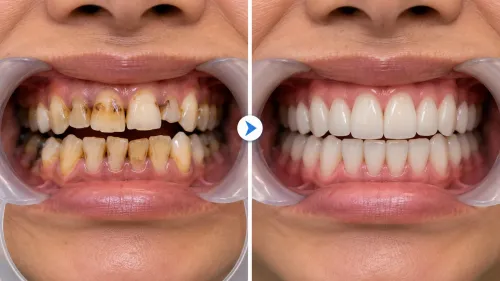
| Composite bonding | Adds tooth-coloured resin to close small spaces, repair chips or alter edges with little or no reduction | More prone to staining, wear, chipping and loss of gloss |
| Professional teeth whitening | Lightens the natural enamel and dentine of teeth | Does not whiten crowns, veneers, fillings or existing bonding |
| Porcelain veneers | Changes colour, width-to-length relationships and worn or chipped edges | Conventional preparation removes enamel and is usually irreversible |
| Dental crowns for smile improvement | Covers and replaces more of a damaged or heavily restored tooth | Removes substantially more structure and is not a routine cosmetic cover |
| Braces or clear aligners | Move crowded, rotated or spaced teeth into better positions | Do not change intrinsic tooth colour and require retention to limit relapse |
Professional teeth whitening is usually the most conservative colour treatment for healthy natural teeth. Higher peroxide concentration, longer contact time and poorly fitting trays increase sensitivity and gum irritation; reducing exposure or pausing treatment generally helps.
Choose based on tooth health, remaining structure, bite forces, gum condition and the source of the concern. Orthodontic movement can create better positions for later reshaping or bonding, while veneers or crowns cannot correct untreated decay, active gum disease or an unstable bite.
Veneers or composite bonding: what should you compare?
Composite bonding is usually the more conservative choice because it can preserve more natural tooth structure and is often easier to repair or modify. Ceramic veneers can offer more consistent translucency, surface texture and colour, but conventional veneer preparation is usually irreversible because enamel is removed.
| Option | Compare this | Practical implication |
|---|---|---|
| Ceramic veneers | Enamel removal and reversibility | Conventional veneer preparation permanently removes enamel; preserving enamel protects long-term tooth health and leaves more replacement options. |
| Ceramic veneers | Appearance and staining | Ceramic resists surface staining and retains gloss well, but the final result depends on shade mapping, laboratory work and preparation. |
| Composite bonding | Appearance and staining | Composite can look natural after careful finishing, but it is more vulnerable to staining, wear, chipping and loss of gloss. |
| Composite bonding | Repairability | A chipped area is usually easier to repair or reshape without replacing the whole restoration. |
| Either option | Durability and appointment time | Veneers usually require preparation, impressions or scans, temporaries and a later fitting visit; bonding can often be completed in one appointment but has less resistance to heavy forces. |
| Either option | Maintenance | Plan ongoing cosmetic dental restoration maintenance, examinations, cleaning and possible polishing or replacement. |
No-preparation veneers are not automatically conservative. Material placed over prominent teeth can create bulky contours, trap plaque and make cleaning difficult. Moisture control affects bonding, while bruxism, nail or pen biting, smoking, acidic diets and poor plaque control increase staining, fracture, debonding or gum problems.
Dental Junction can compare the proposed shape, material, veneer preparation and maintenance plan before you choose from photographs alone.
Related service
Hollywood Smile Design Hollywood Smile Design is a cosmetic dental treatment that enhances the overall appearance of your smile by improving the shape, color, size, and... View service → |
When should orthodontics or dental treatment come before cosmetic work?
Cosmetic work should wait until disease, tooth position and bite are stable. If crowding, spacing, rotation or an uneven bite drives the appearance, orthodontics before veneers can move teeth into better positions, create space for conservative reshaping or bonding, and avoid cutting healthy enamel. Retention follows treatment to limit relapse.
| Problem | Correct sequence | Why it matters |
|---|---|---|
| Crowding, spacing or rotation | Braces or clear aligners, then cosmetic refinement | Movement preserves sound enamel |
| Decay, leaks, gum disease or cracks | Repair and stabilise first | Restorations placed on disease can fail |
| Tooth wear or unstable bite | Diagnose and control the cause first | New restorations need a stable foundation |
| Insufficient tooth structure | Select a suitable restoration or rebuild the tooth | One option may be unsafe or impossible |
Complete gum disease before cosmetic treatment. Also address unrealistic expectations through a frank discussion of achievable changes, limitations and maintenance; this is central to cosmetic dentistry suitability.
Longer veneers do not universally fix excessive gingival display. Causes include altered passive eruption, short clinical crowns, vertical maxillary excess, a hyperactive upper lip and tooth position. Treatment may involve gum treatment, crown lengthening, orthodontics or other medical or surgical care.
Use this decision checklist:
- Identify the source of the concern.
- Preserve sound enamel and adequate tooth structure.
- Test the proposed smile in speech and movement, not only photographs.
- After health and function stabilise, choose whitening, bonding, veneers, crowns, gum treatment, braces or clear aligners and smile design.
Frequently asked questions
What happens during a smile-design consultation?
The dentist discusses your goals, examines your teeth and gums, assesses your bite, and develops treatment options based on comfort, appearance and long-term maintenance.
How do dentists judge tooth proportions, colour and gum balance?
They assess tooth width and length, symmetry, shade, gum display, the relationship between the teeth and lips, and how the smile fits your facial features.
Which treatments can change tooth shape and colour?
Options include professional whitening, composite bonding, veneers, crowns and orthodontics. The suitable choice depends on tooth condition, the change required and your bite.
How should you compare veneers with composite bonding?
Compare how much tooth preparation each option needs, expected durability, stain resistance, repairability, maintenance and whether the result suits your natural teeth.
When should orthodontics or dental treatment come before cosmetic work?
Treat decay, gum disease, infection, worn or damaged teeth and bite problems first. Orthodontics may come before cosmetic treatment when tooth position affects function or the planned appearance.