The right choice depends on the movements required, the condition of your teeth and gums, your stage of jaw growth, and how reliably you can follow the treatment routine. By the end, you will know which findings make fixed braces more predictable, when aligners are practical, and what to ask before accepting a treatment plan.
Key takeaways
- Confirm whether the issue is dental, skeletal, or both before choosing an appliance.
- Choose the appliance that can deliver the tooth movements your case requires.
- Treat active decay and gum disease before starting orthodontic treatment.
- Include appointments, refinements, retainers, and repairs in the total cost.
Start with the diagnosis: is the problem dental, skeletal, or both?
Before choosing braces or aligners, an orthodontist must determine whether the problem is dental, skeletal, or a combination of both. Moving teeth cannot correct a jaw that is too narrow, too far forward, or too far back; a major discrepancy may require growth modification in a child or orthognathic surgery alongside orthodontic treatment.
An orthodontic examination usually follows this sequence:
- The orthodontist records your facial profile, smile, tooth positions, and jaw relationship with photographs and an in-person examination.
- A bite assessment checks overbite, underbite, crossbite, open bite, deep bite, crowding, spacing, and how your upper and lower teeth meet during movement.
- Intraoral scans or impressions map tooth shape and available space. X-rays show impacted teeth, bone levels, tooth roots, root angulation, missing teeth, and jaw structure.
- The clinician checks your gums for active periodontal disease, recession, bleeding, and supporting-bone loss. Inflammation must be controlled before tooth movement because orthodontic forces can worsen attachment loss.
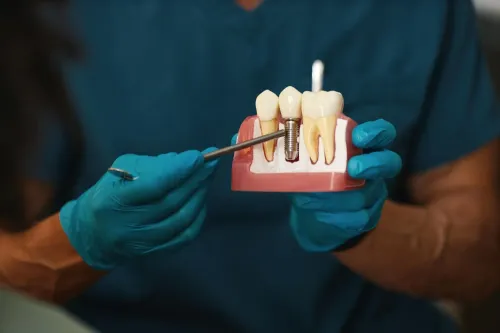
- The plan accounts for jaw growth, crowns, bridges, veneers, large fillings, missing teeth, and implants. An osseointegrated implant does not move like a natural tooth, so restorative and orthodontic treatment may need coordination.
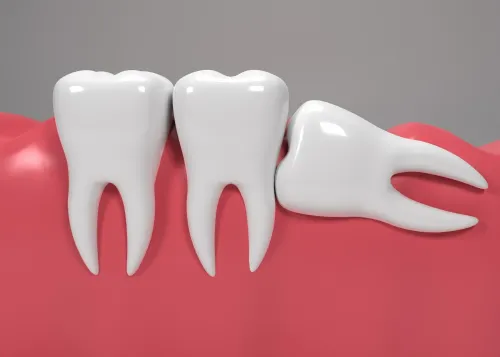
This diagnosis also identifies the limits of either appliance. A severe skeletal discrepancy or an impacted tooth may need treatment beyond braces or aligners, while a primarily dental problem can often be addressed with either option.
Match the appliance to the movements your teeth need
Severe crowding, rotated teeth, impacted teeth, and movements needing precise root control favour fixed braces because brackets and wires maintain force while the orthodontist adjusts individual teeth. Braces are also more predictable for closing extraction spaces, extrusion, bodily movement, and root torque. Aligners can struggle when a tooth must turn substantially or move vertically.
| Appliance | Movement and bite patterns it may handle best | Key limitation |
|---|---|---|
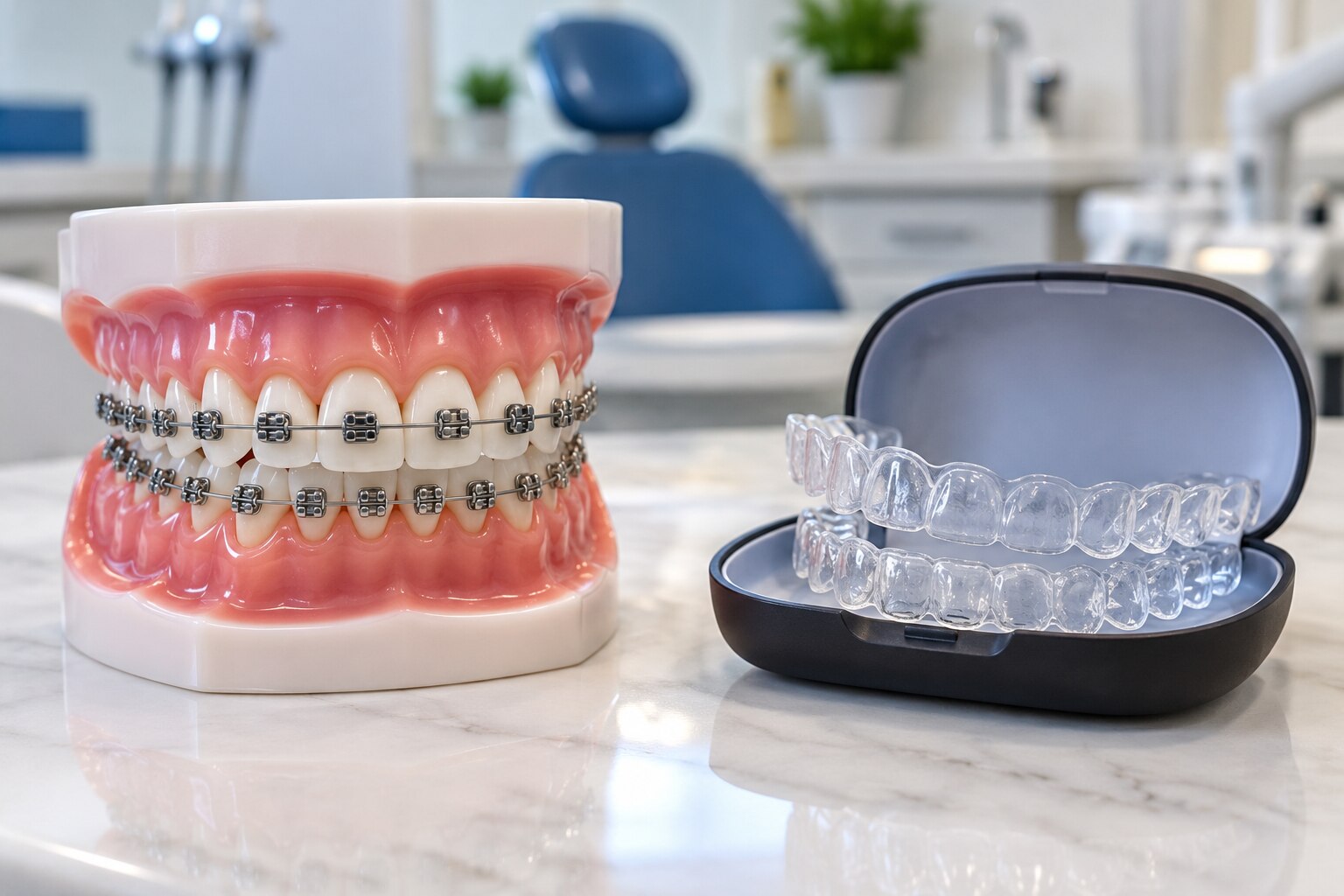
| Fixed braces | Severe crowding, substantial rotations, impacted teeth, extraction-space closure, root torque, deep-bite correction, and complex crossbite or open-bite movements | Brackets and wires complicate brushing, retain plaque, and can cause white-spot lesions |
| Clear aligners | Mild-to-moderate crowding, small gaps, limited rotations, and selected dental crossbite or open-bite cases | Success depends on wearing trays 20–22 hours daily and changing them in sequence |
| Neither alone | Open bite, crossbite, or other problems caused by a major jaw discrepancy | Growth modification or orthognathic surgery may be needed |
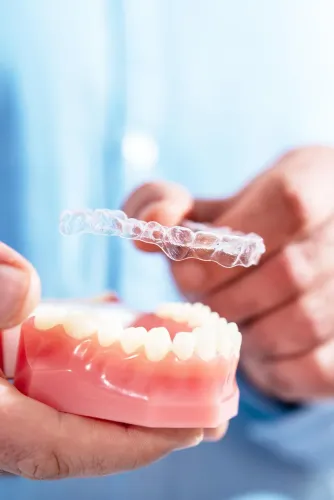
Aligners may suit cases where the planned movements are mainly tipping, minor rotation, or controlled space adjustment. Repeatedly leaving trays out can stall the movement or prevent the next tray from fitting.
A crossbite or open bite caused by a major jaw discrepancy is different: neither appliance alone corrects the underlying bone relationship. The best choice follows the movement plan, not visibility or a promise of faster treatment; duration has no universal winner.
Check your teeth, gums, restorations, and readiness first
An appliance should not move teeth through active inflammation, untreated decay, or unstable supporting bone. Before treatment, an orthodontist and dentist need to confirm that your teeth, gums, roots, restorations, bite, and daily habits can tolerate planned movement.
1. Treat gum disease first. Bleeding, periodontal pockets, or bone loss require periodontal care and stabilisation; moving teeth through uncontrolled inflammation can worsen attachment and bone loss. A previous history of periodontitis does not automatically rule out treatment, but it calls for maintenance visits and closer monitoring.
2. Repair untreated decay before fitting brackets or trays. A cavity hidden under an attachment or trapped beneath an aligner can enlarge while access for cleaning is reduced.
3. Map existing crowns and bridges, veneers, large fillings, missing teeth, and dental implants. Natural teeth can move, but an osseointegrated dental implant does not move like a natural tooth. The restorative dentist and orthodontist may need to coordinate tooth movement, implant spacing, or replacement timing.
4. Test your readiness for the routine. You must be able to brush carefully, clean around brackets or attachments, remove and replace trays as instructed, limit frequent sugary drinks, and attend reviews. Aligners do not protect dirty teeth: wearing one after food can hold plaque and fermentable carbohydrates against enamel.
A scan, photographs, X-rays, and gum assessment reveal risks that a visual preference cannot. Ask which repairs, hygiene targets, or restorative decisions must be completed before either appliance begins.
Compare the daily demands, adherence, and common setbacks
A removable tray simplifies eating and brushing, but it makes treatment compliance your responsibility. Fixed braces stay in place, while aligners work only when you meet the prescribed 20–22 hours of aligner wear each day.
| Option | Daily demand | Common setback |
|---|---|---|
| Braces | Brush carefully around brackets and wires with fluoride toothpaste, then clean between teeth. Avoid hard, sticky foods that can loosen a bracket or bend a wire. | A broken bracket or poking wire needs an orthodontic repair; plaque left around brackets can cause gum inflammation or lasting white-spot lesions. |
| Aligners | Remove trays for every meal and anything except water, brush before replacing them, and clean the trays as directed. Attachments, elastics, or enamel reshaping can add work. | Lost aligners interrupt the sequence and create replacement costs or delays. Leaving trays out repeatedly can lengthen treatment. |
| Both | Attend scheduled reviews and follow instructions for elastics, cleaning, and appointments. | Teeth not tracking the planned movement can require new scans, refinements, or a revised approach. |
Aligners also demand disciplined storage: place them in a case, not a tissue where they can be thrown away. Braces remove the need to remember reinsertion but make hygiene and food choices harder every day.
Neither option ends with the last tooth movement. Both require retainers, often long term or indefinitely, because teeth can shift throughout life. Ask how missed visits, broken appliances, lost trays, and refinements will affect your schedule and fees before choosing.
Price the whole treatment plan, not just the appliance
Treatment duration is not a reliable selling point: aligners are not automatically faster than braces. Ask for the estimated treatment duration, appointment frequency, and the effect of missed visits or poor wear. A digital simulation is a plan, not a guarantee that every movement will occur as shown.
| Option | Compare before choosing | Cost questions |
|---|---|---|
| Fixed braces | Continuous treatment; brackets and wires need cleaning and occasional repairs | Include fitting, adjustment visits, broken-bracket or wire repairs, removal, and retainers |
| Aligners | Trays require roughly 20–22 hours of daily wear; extraction or major space closure may need attachments, elastics, and refinement trays | Include every planned tray, scans, replacement trays, refinement trays, reviews, and retainers |
- Is the quoted fee for the full course or only the first appliance?
- How many refinement trays are included, and what triggers an extra charge?
- Are retainers included, and what is the replacement fee after loss or wear?
- Who reviews progress, how often, and who handles an urgent wire, lost tray, or gum problem?
Retainers follow both options, often for long-term or indefinite wear. Dental Junction can use an orthodontic consultation in Bengaluru to explain the proposed movements, fees, monitoring schedule, and retention plan; compare those specifics instead of choosing on appliance price alone.
Related service
Braces & Aligners Braces and aligners are orthodontic treatments used to correct misaligned, crowded, or uneven teeth and improve bite alignment. View service → |
Frequently asked questions
How does diagnosis affect the choice between braces and aligners?
An orthodontist must identify whether the problem is dental, skeletal, or both. A significant jaw discrepancy may require growth modification or orthognathic surgery alongside orthodontics.
Which tooth movements are harder for aligners to deliver?
The suitable appliance depends on the movements required, including rotation, root control, vertical movement, space closure, and correction of complex bite relationships.
What should you check before starting braces or aligners?
Check for tooth decay, gum disease, poor oral hygiene, unsuitable restorations, and whether you can follow cleaning, appointment, and wear instructions.
What costs should you include when comparing braces and aligners?
Compare the complete plan, including examinations, attachments, adjustments, refinements, emergency repairs, retainers, and follow-up visits—not only the initial appliance.