A tooth that overlaps, twists, tilts or sits away from its neighbours is not automatically a suitable aligner case. You will learn how to identify the alignment problems aligners can address, what an orthodontic assessment must examine, and when attachments, enamel reduction, elastics or another treatment approach may be needed.
Key takeaways
- Selected cases involve mild overlap, rotation or spacing within a stable dental arch.
- An assessment checks roots, jaw position, bite height, gum health and available space.
- Aligner trays move teeth through planned stages using controlled pressure and attachments.
- Severe rotations, large movements or complex bites may need braces or combined treatment.
What “selected” crowding and spacing actually mean
Selected crowding means a limited shortage of space that causes mild tooth overlap, rotated teeth or teeth displaced within the dental arch. Orthodontists assess whether the teeth can move into a stable position without demanding large changes in root position, jaw relationship or bite height.
The distinction is practical:
- Selected crowding: mild-to-moderate overlap, small rotations and limited tilting or expansion where the available space matches the planned movement.
- Selected spacing: a single gap between front teeth or several small spaces that result from tooth position rather than active gum or bone loss.
- Spacing requiring a wider plan: a gap beside a missing tooth or gaps caused by unusually small teeth, because the final result may require a bridge, implant, reshaping or planned space distribution.
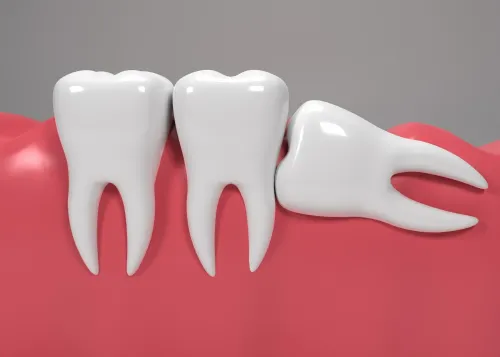
- Less suitable for aligners alone: severe crowding, major rotations, impacted teeth, or movement requiring substantial root control.
- Usually a different problem: spacing or crowding caused mainly by a jaw-size discrepancy rather than tooth position.
“Selected” does not mean every visible gap or overlap is suitable. An orthodontist also checks whether spacing has a continuing cause, such as a tongue-thrusting habit, an abnormal frenulum or periodontal attachment loss; closing the gap without addressing that cause can allow it to reopen.
The same visible alignment problem can therefore receive different treatment recommendations after examination.
Which alignment problems are reasonable aligner candidates
Mild to moderate crowding is usually within the practical range of clear aligners when teeth overlap slightly, sit out of position within the dental arch, or need limited expansion and tipping. Limited spacing, including gaps between front teeth or several small spaces, can also respond well when the teeth and supporting tissues are healthy.
Small rotations and tilted teeth are reasonable candidates when the required correction is modest.
| Movement pattern | Practical expectation | What reduces predictability |
|---|---|---|
| Mild to moderate crowding or limited spacing | Commonly manageable with staged trays, attachments or minor enamel reduction | Severe crowding, large spaces, or gaps linked to missing teeth or unusually small teeth |
| Small rotations and tilted teeth | Often manageable when the tooth has a broad surface and needs a short, controlled movement | Major rotations, especially of round canines and premolars |
| Simple tipping within the arch | Usually more predictable than moving the entire tooth | Bodily translation, root torque, or substantial vertical movement |
| Minor bite adjustments | Selected mild open-bite or deep-bite changes may improve | Large intrusion or extrusion, significant overbite or underbite, or major front-to-back correction |
A smooth tray cannot grip every tooth equally well. Tooth-coloured attachments improve control, but a plan becomes less predictable when it depends on major rotation, extrusion, root movement, impacted teeth, or a skeletal jaw discrepancy. Digital previews show the intended sequence, not a guarantee that each movement will occur without refinements or additional appliances.
What an orthodontic assessment must check before treatment
A safe aligner decision cannot come from a front-facing photograph. An orthodontic examination checks the teeth, gums, bite, jaw relationship and supporting bone before anyone predicts movement.
1. Examine each tooth and the gums for untreated cavities, leaking or unstable restorations, plaque, bleeding, gum pockets and bone-support problems. Active decay or periodontal inflammation must be treated first because orthodontic force can worsen weakened support.
2. Record the bite from the front and sides, including overbite, open bite, crossbite, underbite and shifts between the upper and lower dental midlines. If jaw size or position causes the discrepancy, aligners alone will not correct the underlying skeletal problem.
3. Use a digital scan to map tooth surfaces and create a proposed sequence of movement. Dental impressions remain useful when a physical model is needed or the scan is unreliable, but neither method reveals roots or bone boundaries.
4. Review X-rays when indicated. A panoramic X-ray can show unerupted or impacted teeth, missing teeth, root shape and bone levels; additional small-area or cephalometric images may be needed to assess root angulation and jaw relationships.
5. Check whether the planned movement fits the available bone and periodontal support, then explain its limits. A digital “finished” smile is a plan, not proof of the biological result; extra scans, refinements, attachments, elastics or fixed appliances may become necessary.
Dental Junction can use this assessment to distinguish a case suitable for aligners from one needing disease control, braces or specialist surgical planning first.
Related service
Braces & Aligners Braces and aligners are orthodontic treatments used to correct misaligned, crowded, or uneven teeth and improve bite alignment. View service → |
How trays create movement, space and control
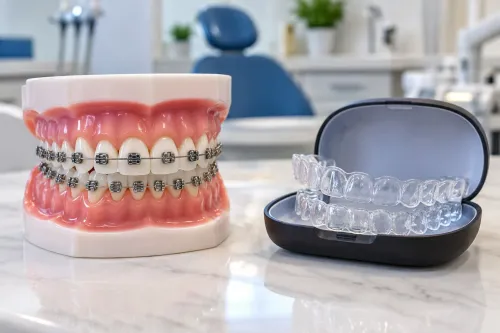
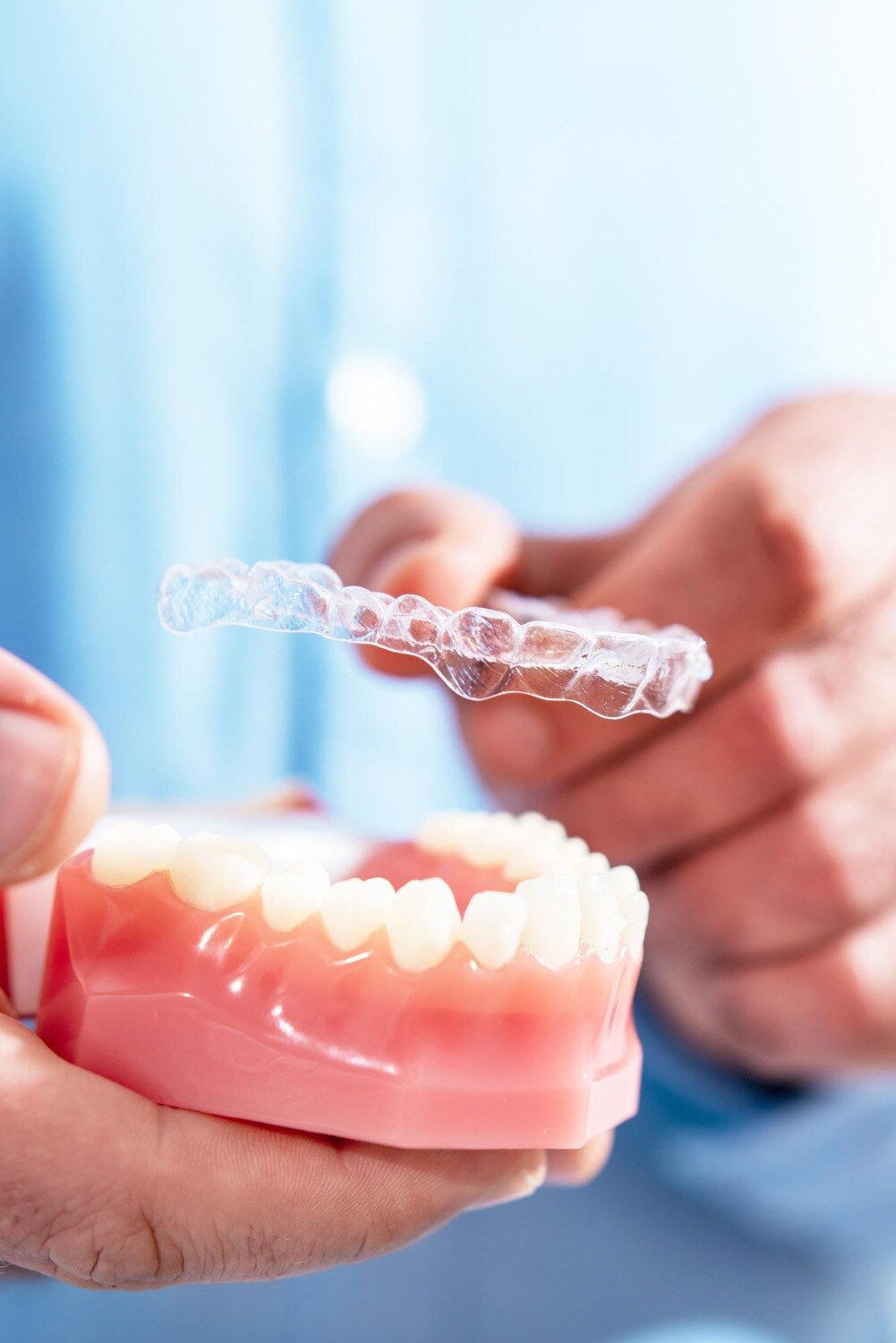
Each staged tray applies gentle, planned pressure to selected teeth while leaving others relatively stable. The sequence changes the force direction from tray to tray, allowing an incisor to tip, a rotated tooth to turn, or a displaced tooth to move toward its planned position.
Each tray must fit closely and be worn for the prescribed hours; poor wear leaves teeth behind schedule.
The main control tools are:
- Tooth-coloured attachments: Small composite shapes give the tray extra grip for rotation, tipping, extrusion or intrusion. They can make aligners more visible, detach during treatment, and require removal and polishing afterward.
- Interproximal reduction: The clinician selectively removes small amounts of enamel between teeth to create limited space for crowding. It does not widen the jaw or create unlimited room; enamel thickness, tooth shape and sensitivity risk determine where reduction is safe.
- Elastics: Rubber bands connect an aligner to attachments or buttons to add force for bite correction that trays alone cannot provide. They require consistent wear and do not replace treatment for a skeletal jaw discrepancy.
- Refinements: A new scan and additional trays correct tracking errors or movements that fell short, such as difficult rotations or vertical changes. A digital prediction is not proof that every tooth will reach its planned position.
Closing a gap without addressing tongue thrust, a missing tooth, small tooth size or gum-support loss can allow spacing to return. The cause still needs treatment.
When alignment needs more than aligners alone
A tooth cannot be moved predictably when the main problem lies in the jaw, the bone, or an obstruction. Severe crowding, large rotations, substantial root movement and extraction-space closure often need fixed braces, extractions, elastics, or a planned change of appliance.
Ask whether your assessment has identified any of these situations:
- Impacted teeth may need surgical exposure and conventional orthodontic traction.
- A crossbite caused by jaw width or position may need expansion or other orthodontic treatment, not aligners alone.
- An open bite or significant deep bite may require attachments, elastics, fixed appliances, or carefully controlled vertical movement.
- A pronounced overbite, underbite, or jaw-size discrepancy may need growth modification during growth or orthognathic surgery after growth ends.
- Severe tooth movements may require a combination of aligners and fixed braces because the digital prediction can exceed what teeth achieve biologically.
A gap also needs cause-based treatment. Persistent tongue thrust, an abnormal frenulum, missing teeth, small teeth, or periodontal attachment loss can reopen spacing after trays close it. Treat the cause and confirm healthy gums before closing the space.
Protect the result by wearing retainers exactly as prescribed, attending review appointments, and reporting a retainer that no longer fits. Your clinician may need scans, refinements, or a different appliance when teeth fall short of the planned movement. Long-term retention matters because teeth can shift after any orthodontic treatment.
Frequently asked questions
What does selected crowding or spacing mean?
It means a limited space imbalance causing mild overlap, rotated teeth, gaps or teeth displaced within the dental arch. The teeth must be able to move into a stable position without major root, jaw or bite-height changes.
Which alignment problems are reasonable candidates for aligners?
Aligners are reasonable for selected mild crowding, spacing, rotations and tooth-position problems when the roots, bite and jaw relationship support predictable movement.
What does an orthodontic assessment check before aligner treatment?
The assessment checks tooth and root position, available space, jaw relationship, bite height, gum health, tooth condition and whether the planned result will remain stable.
When do teeth need more than aligners alone?
Large tooth movements, severe rotations, significant bite or jaw discrepancies, inadequate space, gum limitations or difficult root control can require braces, extra procedures or combined treatment.