An infected tooth often starts with a small route into the pulp, but the signs can range from lingering temperature sensitivity to swelling or no pain at all. You will learn how dentists identify the source, judge whether the tooth can be restored, complete treatment safely, and choose the final restoration that protects it from fracture.
Key takeaways
- Act promptly for lingering pain, swelling, tenderness, or sensitivity to heat.
- Your dentist checks the pulp, root tip, bone, cracks, and restorability before treatment.
- Root canal treatment removes infected pulp, cleans the canals, and seals the tooth.
- A strong final restoration protects the treated tooth from fracture and reinfection.
How bacteria reach the pulp—and which symptoms need attention
Deep decay, a crack, a leaking filling, or a blow to the tooth can let bacteria pass through enamel and dentine into the dental pulp. This soft tissue contains nerves and blood vessels; once bacteria reach it, inflammation can become irreversible and progress to infection around the root tip.
A superficial cavity or ordinary gum inflammation is not the same problem.
Recognise these tooth infection symptoms and arrange an examination:
- Lingering hot or cold sensitivity, especially when the pain continues after the heat or cold is removed.
- Spontaneous toothache, pain on biting, or tenderness when the tooth is tapped.
- Swelling, a gum boil, pus, bad taste, or facial swelling.
- Fever, malaise, or a tooth that has darkened.
| Finding | What it may indicate | What to do |
|---|---|---|
| Lingering hot or cold sensitivity | Inflamed pulp that may not recover | Book a dental examination promptly |
| Pain on biting or swelling | Irritation or infection around the root | Arrange urgent assessment |
| No pain after earlier severe pain | Pulp tissue may have died while bacteria remain | Do not wait for pain to return |
Symptoms alone do not confirm endodontic disease. A dentist compares your history with cold or electric pulp testing, percussion, bite testing, periodontal examination, and dental X-rays. Arrange same-day care for facial swelling, fever, difficulty swallowing, or difficulty breathing; these signs can indicate infection spreading beyond the tooth.
How the dentist confirms infection and checks whether the tooth can be saved
Pain alone cannot establish endodontic disease. A tooth with pulp necrosis or infection around the root tip can be painless, while a crack or inflamed gum can create similar symptoms. The dentist compares your pain history with clinical findings instead of relying on one test.
The diagnostic checks usually include:
- Your account of triggers, duration, lingering sensitivity, spontaneous pain, and pain on biting.
- A cold pulp test, which checks whether the pulp responds and whether that response fades quickly or lingers.
- Electric pulp testing, which measures nerve response but cannot by itself prove that the pulp is healthy.
- A percussion test and palpation, which identify tenderness in the tooth or tissues around its root.
- A periodontal examination, bite testing, and inspection for a crack, loose restoration, swelling, or a draining gum lesion.
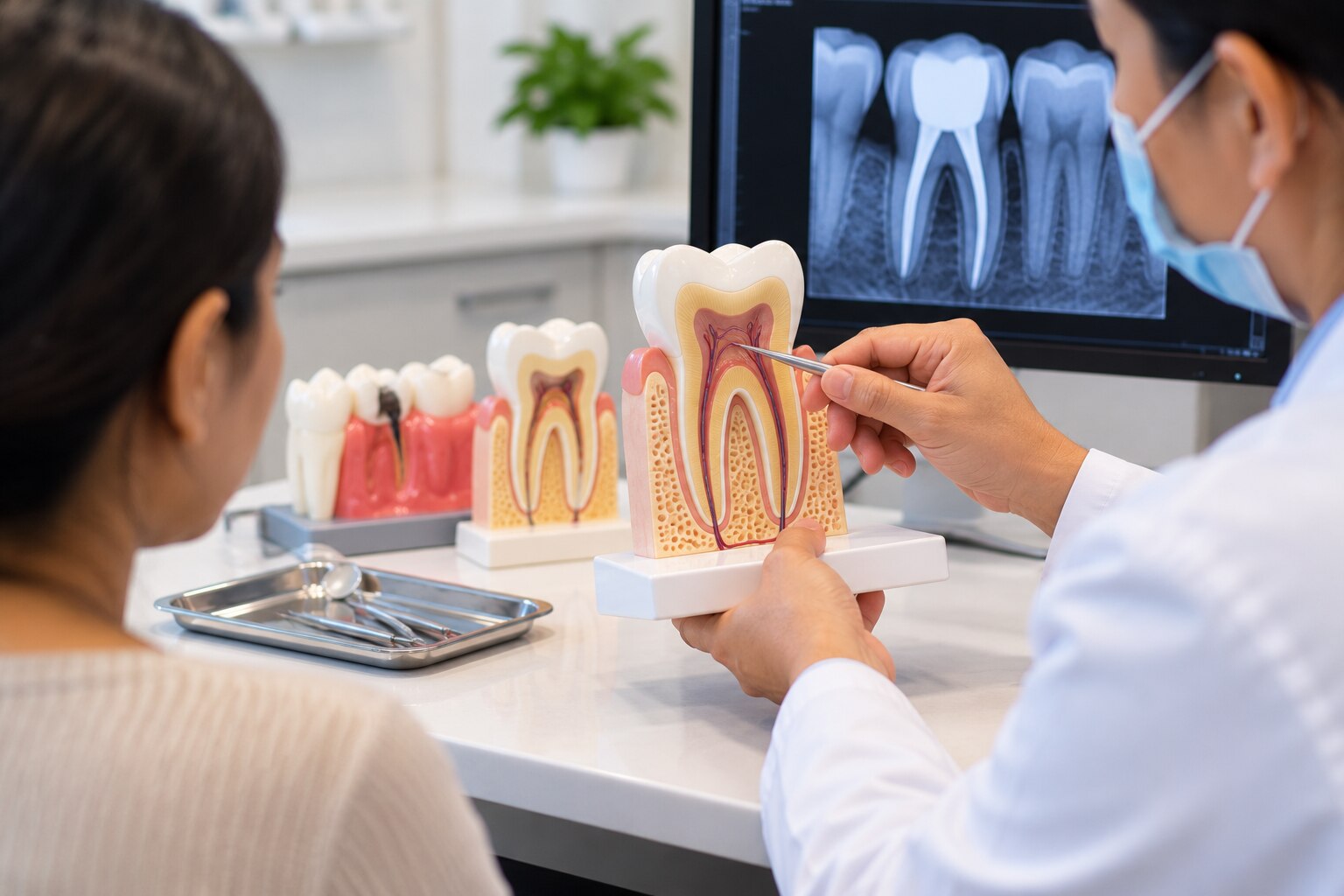
- A dental X-ray, which can show deep decay, an altered root shape, bone loss near the root tip, or a previous root filling. Early infection can exist before an X-ray shows a clear change.
The dentist then assesses restorability, not just infection. Enough solid tooth must remain above the gum to hold a reliable filling or crown, and the root must be intact. A vertical root fracture, decay extending below the gum, or inadequate supporting bone can make preservation unreliable.
The final decision also considers whether a predictable seal and restoration are possible; if so, root canal treatment can retain the natural tooth.
What happens during root canal treatment, from anaesthetic to temporary closure
Local anaesthetic numbs the tooth and nearby gum before treatment begins. The dentist then places a rubber dam around the tooth, isolating it from saliva, keeping disinfecting fluids away from the mouth, and preventing instruments or debris from being swallowed.
1. The dentist opens a small access through the chewing surface and removes infected pulp tissue. Preserving sound enamel and dentine matters because the remaining tooth structure helps resist fracture.
2. Small files and an electronic apex locator, supported by a dental X-ray when needed, establish the working length—the distance to which each canal can be cleaned without passing through the root tip.
3. The dentist enlarges and shapes the canals with hand or rotary instruments. Canal irrigation flushes out tissue, bacteria, and dentine debris; controlled delivery prevents the solution from being forced into surrounding tissues.
4. After the canals are cleaned, shaped, and dried, the dentist fills them with gutta-percha and a sealing cement. The filling must reach the prepared length without leaving voids that could shelter bacteria.
5. A temporary filling closes the access opening and blocks saliva and new bacteria while the tooth awaits its definitive restoration. Avoid chewing hard or sticky foods on that tooth, because an unrestored tooth can fracture even after the infection has been removed.
Why the final restoration determines how well the tooth survives
A root filling seals the cleaned canal; it does not replace tooth structure lost to decay, cracks, or the access opening. Without a prompt permanent tooth restoration, weakened walls can flex or split under chewing, especially if you bite hard foods before the final restoration is placed.
The dentist chooses based on the amount of sound tooth remaining, the tooth’s position, and the forces it receives:
| Option | What it means | When it applies |
|---|---|---|
| Bonded filling | A tooth-coloured material bonded to the remaining walls | When substantial walls and marginal ridges remain, particularly in a lower-force front tooth |
| Cuspal-coverage restoration | Covers and braces one or more chewing cusps | When a back tooth has lost large areas of structure or carries heavy biting forces |
| Dental crown after root canal | A full-coverage restoration enclosing the visible tooth | When cuspal protection is needed and enough tooth remains to support the crown |
A bonded filling is not automatically weaker, and a crown is not automatically better. Removing sound tooth structure to fit full coverage can reduce the remaining support, while skipping cuspal protection on a heavily damaged molar leaves fracture-prone cusps exposed.
At Dental Junction, the useful question is whether the proposed restoration matches the remaining walls, bite contacts, tooth type, and crack risk—not simply whether the tooth has had root-canal treatment.
Related service
Root canal Root Canal Treatment is a dental procedure used to treat infection or damage inside the tooth while saving the natural tooth. View service → |
What to expect after treatment—and what happens if infection persists
Mild tenderness for a few days is common during root canal recovery. Take the pain medicine recommended for you, avoid chewing hard or sticky foods on that tooth, and arrange the definitive filling or crown promptly if a temporary seal was placed.
Antibiotics for tooth infection do not replace cleaning the canal; dentists reserve them for spreading infection or systemic signs such as fever and facial swelling.
- Contact your dentist if pain worsens after two or three days, swelling appears, your bite feels high, the temporary filling falls out, or drainage and a bad taste continue.
- Seek urgent care for rapidly increasing facial or neck swelling, difficulty swallowing, difficulty breathing, or fever.
- Do not bite hard foods with an unrestored tooth. Fracture risk rises when little sound tooth structure remains, and a crack can make an otherwise treatable tooth unsalvageable.
A persistent lesion or recurring symptoms need a new examination and X-rays, not automatic extraction. Missed canals, poor sealing, new decay, a leaking restoration, or a root fracture require different decisions.
Root canal retreatment can remove remaining infection and reseal the canals; endodontic surgery can treat infection around a root when retreatment cannot reach the cause.
If the tooth cannot be restored, extraction removes it but starts a replacement decision. Tooth extraction alternatives include an implant, a fixed bridge, or a removable prosthesis; leaving the gap can affect chewing and allow neighbouring teeth to move. A dentist should compare these options after confirming the diagnosis and the tooth’s fracture risk.
Frequently asked questions
How do bacteria reach the dental pulp?
Deep decay, cracks, leaking fillings, and dental trauma can let bacteria pass through enamel and dentine into the pulp.
Which symptoms need attention for a possible infected tooth?
Seek dental assessment for persistent tooth pain, sensitivity, tenderness when biting, swelling, or signs of infection around the tooth.
How does a dentist determine whether a tooth can be saved?
The dentist evaluates the pulp and root-tip area, examines the tooth for cracks and decay, and checks whether enough sound structure remains for restoration.
What happens during root canal treatment?
After local anaesthetic, the dentist accesses the pulp, removes infected tissue, cleans and shapes the canals, fills them, and places a temporary closure.
Why is the final restoration important after root canal treatment?
The final restoration seals the tooth and protects weakened tooth structure from fracture, leakage, and reinfection.