Crowded teeth, spaces between teeth, and an uneven bite can affect both appearance and oral hygiene. Many adults and teenagers want straighter teeth but hesitate because they do not want visible metal brackets throughout treatment. Aligners provide another approach by moving teeth gradually through a planned series of removable trays.
The treatment may look simple from the outside, but successful tooth movement requires considerably more planning than wearing transparent trays.
How Do Clear Aligners Move Teeth?
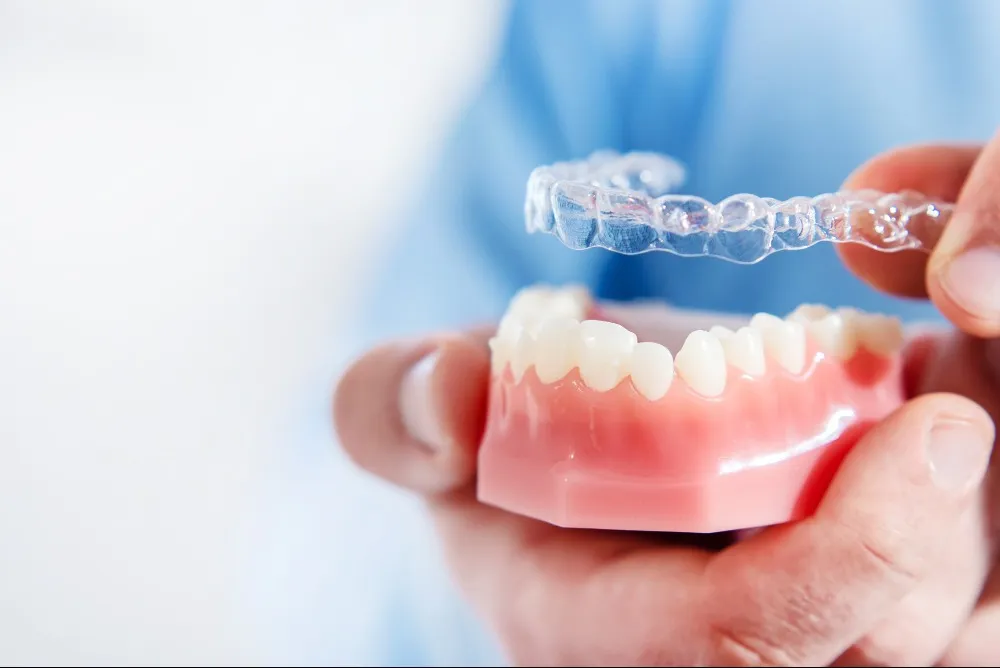
Aligner treatment begins with an assessment of the teeth, gums, jaws, and bite. Digital scans or dental impressions can then be used to plan controlled tooth movements.
Patients receive a sequence of trays. Each tray is designed to apply gentle pressure to selected teeth, gradually guiding them toward their planned positions.
The trays are generally worn for most of the day and removed when eating, drinking certain beverages, brushing, and flossing.
What Dental Problems Can Aligners Address?
Depending on the individual case, aligner treatment may help manage:
- Mild to moderate dental crowding
- Gaps between teeth
- Certain rotated teeth
- Some overbite concerns
- Some underbite concerns
- Crossbite in selected cases
- Relapse after previous orthodontic treatment
The important phrase is 'selected cases.' Transparent trays are not automatically the right treatment for every orthodontic problem.
More complex tooth movements and significant jaw-related bite concerns may require a different orthodontic approach.
Why Does Wearing Time Matter?
One of the attractions of aligners is that they are removable. That benefit also creates one of their biggest challenges.
Teeth move only when the trays are being worn as prescribed. Frequently removing them for long periods can interfere with planned movement.
Consistency matters particularly for busy professionals, college students, and teenagers who may spend much of the day away from home.
Patients considering treatment in Bengaluru should think realistically about whether they can follow the recommended wearing schedule before choosing this approach.
Are Aligners Easier to Clean?
Because trays can be removed, brushing and flossing are generally more convenient than cleaning around fixed orthodontic brackets.
The teeth still need careful daily hygiene. Food debris and plaque should be removed before the trays are placed back over the teeth.
The aligners themselves also require regular cleaning according to the dentist's instructions.
Are Clear Aligners Completely Invisible?
They are better described as discreet rather than invisible.
The transparent material makes them considerably less noticeable than conventional metal appliances in many situations. Some treatment plans may also require small tooth-coloured attachments on selected teeth to help produce particular movements.
These attachments can be visible at close range.
What Happens After Teeth Become Straight?
Orthodontic treatment does not finish simply because the final tray has been completed.
Teeth naturally have a tendency to shift after active treatment. Retainers are therefore an important part of maintaining the corrected position.
The type of retainer and wearing schedule depend on the individual treatment plan.
For residents of Hebbal and surrounding Bengaluru neighbourhoods, an orthodontic evaluation can determine whether Aligners are appropriate for the type of correction required.
Dental Junction can assess alignment, bite relationships, gum health, and treatment expectations before recommending a suitable orthodontic approach. The best treatment is not necessarily the least visible option, but the one capable of achieving controlled and maintainable tooth movement for the individual case.
Keywords